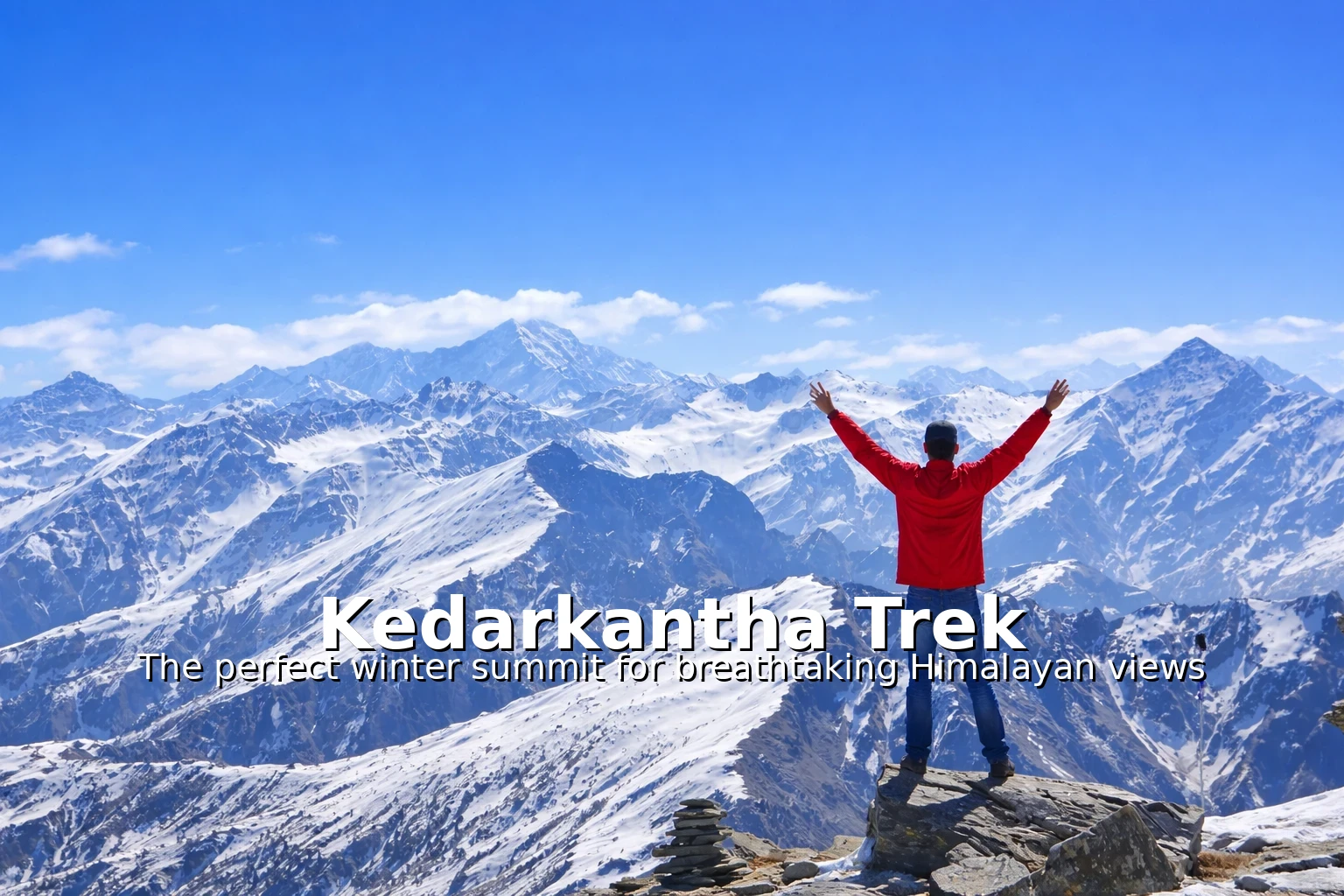
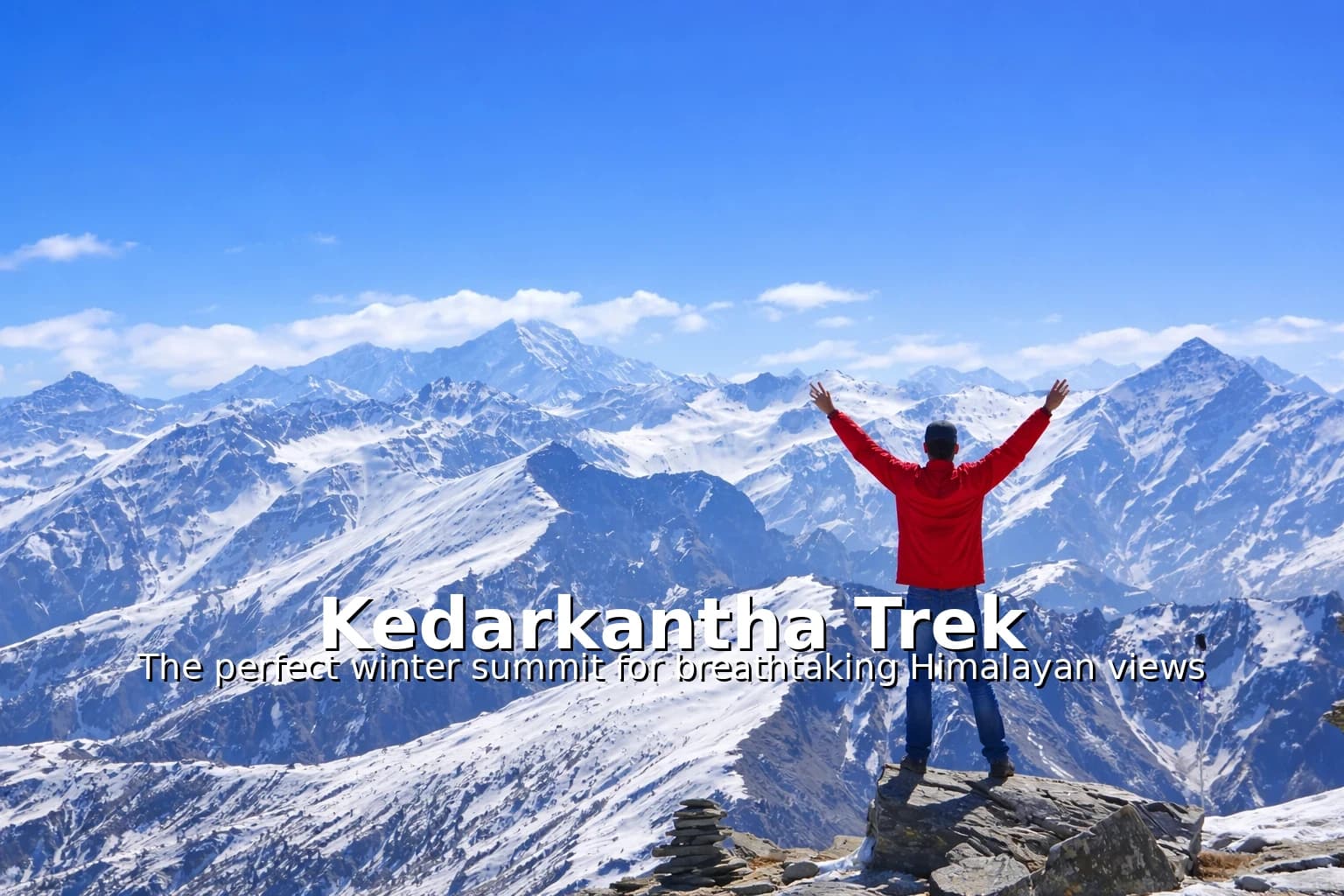

Kedarkantha Trek
The Kedarkantha Trek is one of the most popular winter treks in Uttarakhand, known for its snow-covered trails, forest landscapes and rewarding summit climb. Located in the Garhwal Himalayas, this trek offers a complete Himalayan experience with dense pine forests, open meadows and panoramic views from the summit. The Kedarkantha Trek is especially popular during the winter months when the entire route is covered in snow, making it an ideal choice for beginners as well as experienced trekkers looking for a classic winter trekking experience.
Trek Summary
| Starting From | Dehradun | Ending at | Dehradun |
| No of days | 6 | Number of nights | 5 |
| Night stays at | Guest House (1N) Tent (3N) Guest House (1N) | ||
Kedarkantha Trek Overview
The Kedarkantha Trek typically spans 4 to 6 days and begins from the village of Sankri in Uttarakhand. The trail passes through dense forests, clearings and high-altitude campsites before reaching the summit of Kedarkantha.
The highlight of the trek is the summit climb, which offers panoramic views of major Himalayan peaks. The route is well-defined and relatively short, making it one of the most accessible summit treks in India.
Key Highlights of the Kedarkantha Trek
Snow-covered trails (winter): One of the best treks for experiencing snowfall
Summit climb: Panoramic views of Himalayan peaks from the top
Dense pine forests: Scenic forest sections along the route
High-altitude campsites: Camps with wide mountain views
Beginner-friendly summit trek: Ideal introduction to Himalayan trekking
Price Details
Trek Price
-
Trek price is ₹12,500 per person.
-
Prices vary depending on the departure batch.
-
Refer to the floating pricing panel for batch-wise pricing.
Kedarkantha Trek Itinerary
Day 1: Drive from Dehradun to Sankri
190 km, 8 hrs
The drive from Dehradun to Sankri takes you through picturesque towns and villages. The route is scenic and takes you through a dense pine forest, filling the air with the sweet aroma of pines. The 190 km long drive typically takes 8-9 hours to complete, so it is advisable to start early to reach Sankri by evening.
Overnight stay at a guest house.
Day 2: Sankri to Juda Ka Talab
2774m / 4 km / 3-4 hours
We start our trek towards Juda Ka Talab early in the morning after breakfast from Sankri. The trek is an eventful one as we pass through local villages. The trail takes us through a dense pine forest, which gradually steepens until we reach a ridge. After walking on the ridge for a while, the trail evens out and widens. The thick forest provides a cool environment, shielding us from the sun's heat. Finally, we reach the famous Juda Ka Talab, a small lake adorned with three floating landmasses. We camp by the lake, savoring a starry dinner.
Overnight stay at a camp on twin-sharing basis.
Day 3: Juda Ka Talab to Kedarkantha Base Camp
3,429 m / 4 km / 3-4 hours
From Juda Ka Talab, the trail leads deeper into dense pine forests until reaching a meadow with shepherd's huts. Summit Climbing further for another thousand feet, trekkers will finally reach the Kedarkantha base camp, taking around 2-3 hours to complete. The trail from Juda Ka Talab to the base camp is incredibly stunning, providing an ideal setting for photographers and nature enthusiasts alike. Despite being a bit colder due to the lack of insulation, the base camp offers panoramic views of the famous peaks of Uttarakhand, making it an ideal spot for camping.
Overnight stay at a camp on twin-sharing basis
Day 4: Kedarkantha base camp to Kedarkantha Summit to Hargaon
3,429 m to 3,810 m to 2,713 m / 8 km / 5-6 hours
Day 4 is the day you've been waiting for! The trek to the summit from the base camp is not long, and upon reaching the top, you will be rewarded with a jaw-dropping 360-degree view of the Uttarakhand peaks, the Chaainsheel Pass, and the Kailash ranges of Himachal. You can even see the Har Ki Dun valley below. The Kedarkantha summit is marked by an arrangement of stones with a Trishul pointing to the sky.
After spending time on the summit, we hike back to the base camp and head towards Hargaon (2 km trail) post-lunch. Hargaon is a large camping area en route to Sankri, where we will spend the night before bidding farewell to this beautiful place.
Overnight stay at a camp on twin-sharing basis.
Day 5: Hargaon to Sankri
4 km / 2-3 hours
Today is the final day of our trek and we will descend from Kedarkantha to Sankri, which is a 4 km trek taking 2-3 hours. Once we reach Sankri, you can take the rest of the day to explore the charming village and nearby villages like Gangad and Osla, which are known for their warm hospitality and traditional Pahari culture.
Overnight stay at a guest house
Day 6: Sankri to Dehradun
190 km drive in 7 to 8 hours
Going back home is always a bittersweet moment, but the journey is made easier by taking the same picturesque road back to Dehradun. As we leave behind the dense pine forests and descend towards the city, the landscape slowly changes and opens up into wider roads. Finally, we arrive in the bustling city, bidding farewell to the serene mountains and valleys of Uttarakhand.
Why Kedarkantha Is the Most Popular Winter Trek in India
The Kedarkantha Trek is widely regarded as one of the best winter treks because of its consistent snowfall, well-marked trails and accessible difficulty level. During winter, the entire landscape transforms into a snow-covered environment, with frozen trails, snow-laden trees and clear mountain views.
Unlike many other treks that become inaccessible in winter, Kedarkantha remains open and offers a safe and enjoyable snow trekking experience.
Kedarkantha Trek Difficulty Level
The Kedarkantha Trek is considered a moderate trek, suitable for beginners with basic fitness as well as experienced trekkers.
The route includes gradual ascents and a slightly steeper summit climb, but does not require technical climbing skills.
Best Time to Do the Kedarkantha Trek
Kedarkantha is a year-round trek, but the experience varies by season:
December to March: Best for snow trekking and winter landscapes
April to June: Pleasant weather with clear views and greenery
September to November: Crisp weather and excellent mountain visibility
The winter season is the most popular due to snow-covered trails.
How Many Days Are Needed for the Kedarkantha Trek?
Most itineraries span 5 days, depending on the route and pace. This duration allows for a gradual ascent, summit attempt and return journey.
Starting Point of the Kedarkantha Trek
The trek typically starts from Sankri, a small village in Uttarakhand that serves as the base for several trekking routes in the region. Sankri is accessible by road from Dehradun.
Who This Trek Is Ideal For
Beginners looking for a winter trek
Trekkers interested in a summit experience
Adventure travelers seeking snow trekking
Small groups and first-time Himalayan trekkers
Preparation for the Kedarkantha Trek
Trekkers should prepare with basic cardio exercises, walking or hiking before the trek. Warm clothing, waterproof gear and proper trekking shoes are essential, especially during winter when temperatures drop significantly.
What Makes Har Ki Dun Different from Other Himalayan Treks
Unlike alpine lake treks such as the Kashmir Great Lakes Trek, the Har Ki Dun Trek focuses more on valley landscapes, forests and village life. The trek offers a more gradual and culturally rich experience compared to high-altitude routes that involve steep ascents and multiple mountain passes.
Important Points for Kedarkantha Trek
Keep a day of buffer before booking your return flight/train ticket (to account for any delays due to weather or otherwise.
You will be out of mobile network area for all days of the trek. Please inform your loved ones that you will be lost in the most beautiful part of the world for next few days.
If you experience any symptoms of High Altitude Sickness (also known as Acute Mountain Sickness), please inform the trek lead immediately. Do not ignore the symptoms.
Being hydrated during the trek is the mantra. Practise drinking enough water to keep yourself hydrated. It will also help reduce the symptoms of high altitude sickness.
What to pack for Kedarkantha Trek?
Non-skid, deep treaded, high-ankle trekking shoes
Pair of lightweight Slipper/Sandals
Quick Dry Warm lower or Track Pants (2)
Full sleeves T-shirts / Sweatshirts (1 for every 2 days of trekking)
Pair of thick woollen socks (1 pair for every two days of trekking)
Thermal Body warmer Upper & Lower
Undergarments / Innerwear (1 for every day of trekking)
Warm jacket closed at wrist & neck (1)
Full sleeves sweater (1)
Rain wear (Jacket & Pants)
Pair of waterproof warm gloves (1)
Woolen cap (1)
Sun shielding Hat (1)
Rucksack bag with rain cover (1)
Day Pack Bag - Recommended for treks with summit days
Head Torch / Flashlight with spare batteries (mobile flashlight will not be enough)
UV protection sunglasses
Water Bottle (2) (1 litre each)
Utensils: Small size, Lightweight & Leak proof lunch box
Plate, Spoon, Coffee/Tea Mug
Your regular medicines and few others for emergency (if any)
Dry Fruits, snacks, soft drinks etc
Documents: Government issued Address Proof (Voter ID, Aadhaar, Driver's License, Passport) (mandatory)
Documents: Doctor's Certificate (mandatory)
Documents: Signed Disclaimer Form (will be shared before trekking) (mandatory)
What is included in the price?
Transport from Dehradun to Campsite on first day
Transport from campsite to Dehradun on last day
All meals during the trek (breakfast, lunch, evening snacks, dinner) - starting from dinner on day 1 to breakfast on day 7
Accommodation on twin sharing basis at camps from Day 1 to Day 6
Highly Experienced Trekking Guide
Kitchen tents, toilet tents, sleeping tents, sleeping bags etc
Hot water for drinking purpose shall be provided on request.
Kitchen, dining and toilet tents will be used during the trek.
Cooks/Helpers for carrying common equipment like rations / tents / utensils / groceries
Skilled local staff who have ample knowledge of the route.
Accommodation - tents, sleeping bags, sleeping mats etc
Safety equipment - as per requirements and basic first aid kit with a portable oxygen cylinder
Permit - forest and camping fee included.
What are excluded from the price?
Airfare / flight tickets, train tickets, bus tickets etc.
Accommodation outside of camps
Baggage offloading charges / porter or mule charges
Travel Insurance
Anything not mentioned in inclusions
Starting From
₹12500
Per Person


