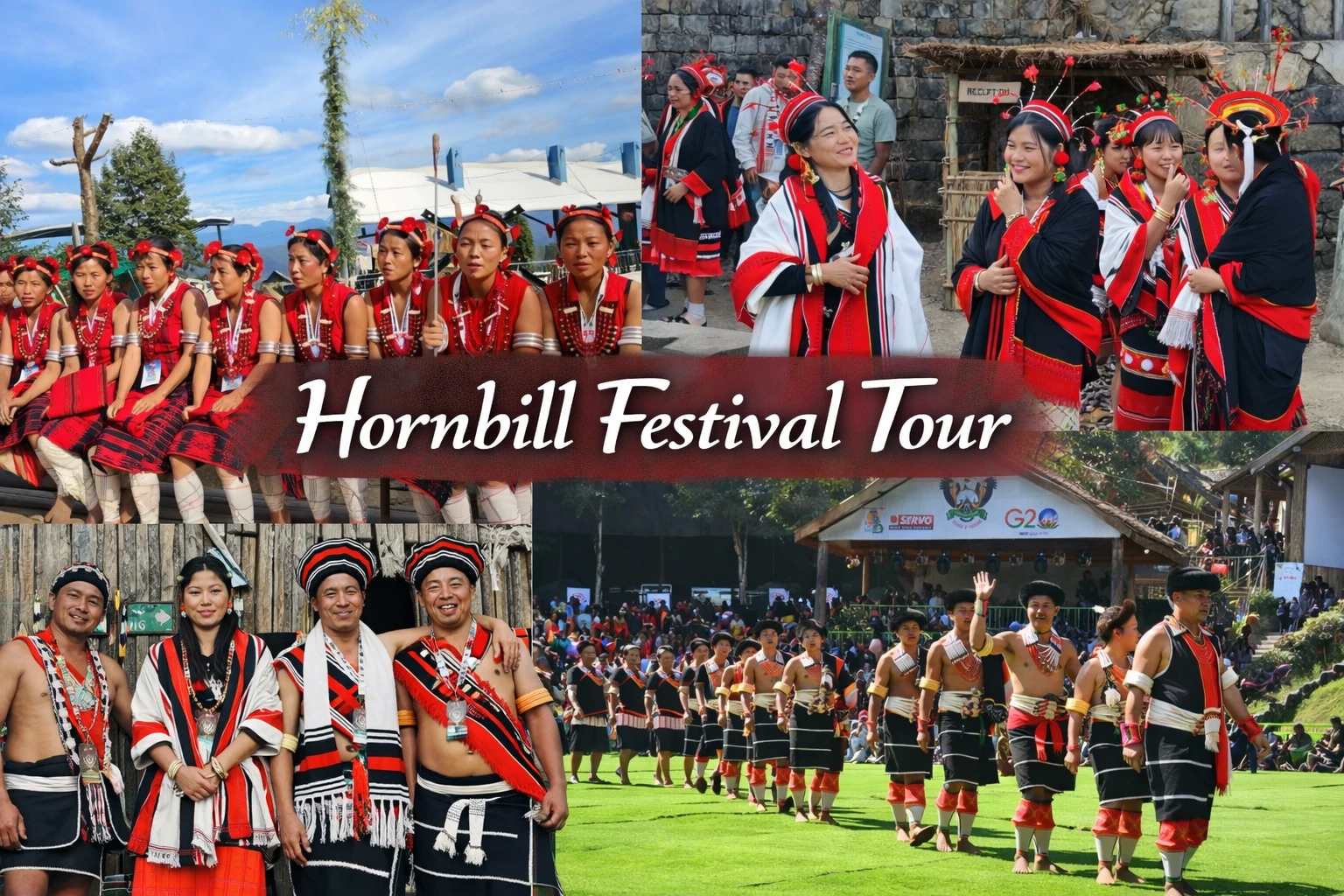
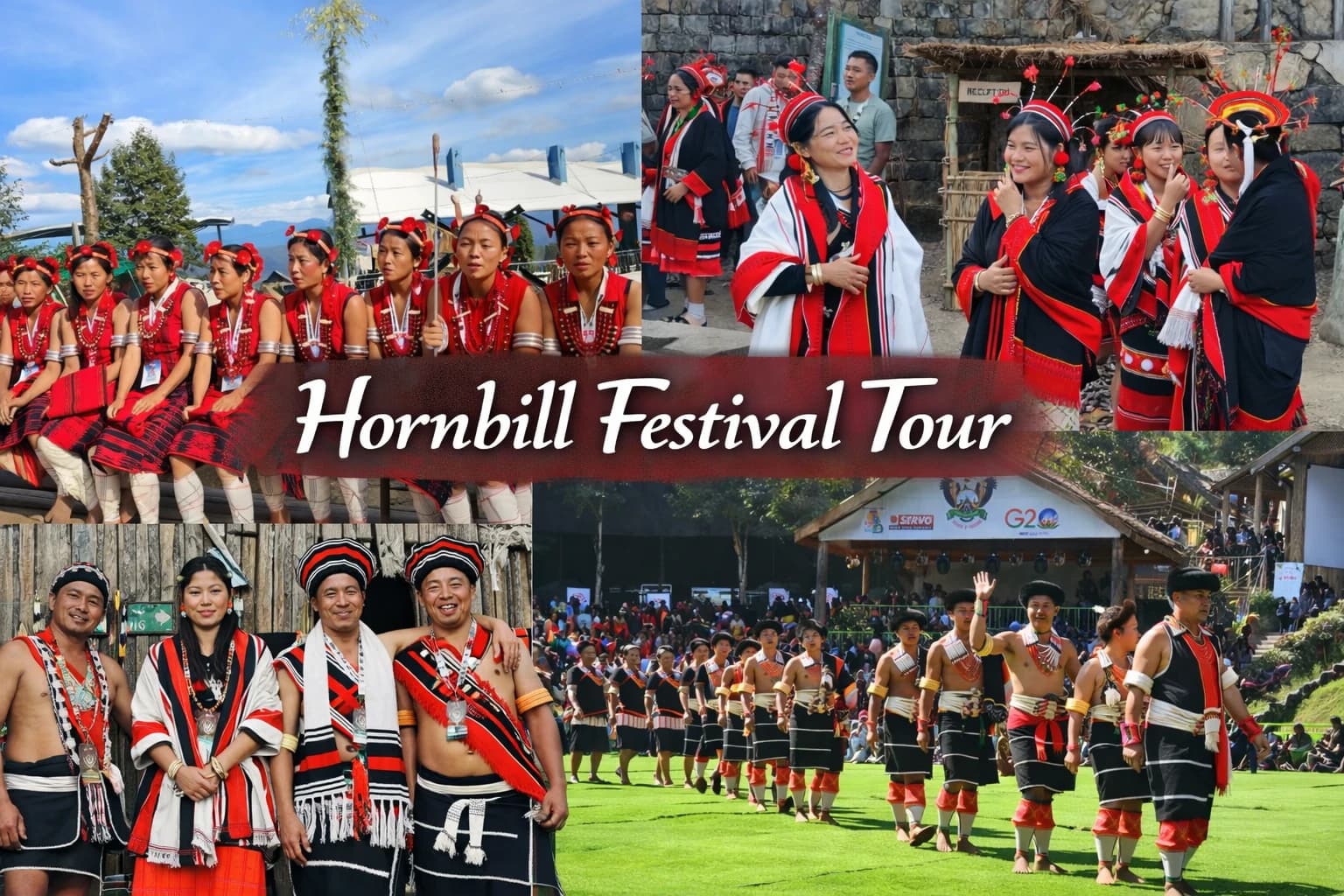
Hornbill Festival Tour
Our Hornbill Festival Tour is designed for travellers who want to experience Nagaland's biggest cultural celebration without rushing through the journey. Along with two full days at the Hornbill Festival, this itinerary includes visits to the historic village of Khonoma, the peaceful hamlet of Dzuleke, and the important landmarks of Kohima, offering a well-rounded introduction to Nagaland's culture, history and natural beauty. With comfortable accommodations, guided sightseeing and an optional Dzukou Valley Trek extension, this tour is ideal for travellers looking to experience the best of Nagaland in a single holiday.
Tour Summary
| 📍 Tour Starts | Dimapur |
| 🏁 Tour Ends | Dimapur |
| 🗓 Duration | 5 Days / 4 Nights |
| 🌙 Staying at | Kohima (4 nights) |
| Short Itinerary | Day 0: Nov 28, 2026: Guwahati to Dimapur (Overnight) Day 1: Nov 29, 2026: Dimapur Sightseeing - Kohima Day 2: Nov 30, 2026: Khonoma & Dzuleke Village Tour Day 3: Dec 1, 2026: Hornbill Festival - Opening Ceremony Day 4: Dec 2, 2026: Hornbill Festival - Second Full day Day 5: Dec 3, 2026: Kohima Sightseeing - Dimapur (Tour Only) Day 6: Dec 4, 2026: Dzukou Valley Exploration (Tour & Trek) Day 7: Dec 5, 2026: Kohima to Dimapur (Tour & Trek) Day 8: Dec 6, 2026: Guwahati Departure (Tour & Trek) |
Package Details
Hornbill Festival Tour
Group Tour Package Price
The group tour package price of Hornbill Festival Tour depends on the batch dates.
We have batches with package price ranging from ₹21500 to ₹24000 per person.
For more details, use the floating pricing panel.
Package Inclusions / Exclusions
Package Inclusions for Group Tours
-
Accommodation for 1 extra night in a hotel (double sharing) (Tour + Trek batch)
-
Accommodation for 1 night in a tent at Dzukou Valley (Tour + Trek batch)
-
Additional Breakfast for 2 days (Tour + Trek batch)
-
Registered guide charges for the trek (Tour + Trek batch)
-
Pickup and drop from Dimapur
-
Accommodation for 4 nights in a hotel (double sharing)
-
Breakfast for 4 days
-
Local transportation in Nagaland
-
Inner Line Permit for Nagaland (Indians)
-
Tour Leader / Trip Captain
Package Exclusions for Group Tours
-
Lunch, dinner, snacks, beverages
-
Airfare, train tickets, bus tickets
-
Entry fee, camera fee, certain mandatory guide charges
-
Personal expenses
-
Anything not mentioned in Inclusions
Why Choose This Hornbill Festival Tour?
Spend two full days at the Hornbill Festival, giving you enough time to experience performances, tribal morungs, local cuisine and cultural events at a relaxed pace.
Go beyond the festival with guided visits to Khonoma, India's first green village, and the picturesque village of Dzuleke, offering a deeper insight into Nagaland's culture and landscapes.
Stay comfortably in Kohima, allowing you to enjoy the festival during the day while relaxing in a hotel each evening instead of temporary camps.
Explore important landmarks of Kohima, including the historic War Cemetery, Cathedral and local markets.
Choose to extend your journey with the optional Dzukou Valley Trek, one of Northeast India's most scenic trekking experiences.
Itinerary of Hornbill Festival Tour
Day 0: Nov 28, 2026: Guwahati to Dimapur (Overnight)
Arrive at Guwahati Airport or Railway Station by around 5 PM to comfortably account for any flight or train delays. Meet the group and board the overnight train to Dimapur, the gateway to Nagaland. Relax and get a good night's rest as your Hornbill Festival adventure begins.
Day 1: Nov 29, 2026: Dimapur Sightseeing - Kohima
Arrive at Dimapur Railway Station early in the morning and freshen up at the retiring rooms before beginning your exploration of Nagaland's largest city.
Visit some of Dimapur's popular attractions, including the historic Kachari Ruins, Chumukedima Viewpoint, Hong Kong Market, and other places depending on the available time. Once the capital of the ancient Dimasa Kingdom and an important base during World War II, Dimapur offers an interesting blend of history, culture and modern-day Nagaland.
Later, drive through the scenic hills to Kohima. Check in to your hotel and relax for the evening before the adventures ahead.
Day 2: Nov 30, 2026: Khonoma & Dzuleke Village Tour
Today we explore two of Nagaland's most beautiful villages - Khonoma and Dzuleke. Walk through the traditional Angami village of Khonoma, known for its terraced fields, heritage homes and inspiring conservation efforts.
Later continue to the peaceful village of Dzuleke, surrounded by forests, rolling hills and crystal-clear streams. Spend some time soaking in the serene atmosphere before returning to Kohima for an overnight stay.
Day 3: Dec 1, 2026: Hornbill Festival - Opening Ceremony
Spend the day at the Naga Heritage Village, Kisama, where the world-famous Hornbill Festival comes alive with colourful cultural performances, traditional music, tribal dances and indigenous cuisine.
Explore the beautifully crafted morungs of different Naga tribes, interact with local artisans, watch cultural demonstrations and enjoy one of India's most vibrant festivals before returning to your hotel in Kohima.
Day 4: Dec 2, 2026: Hornbill Festival - Second Full day
After breakfast, return to the Hornbill Festival for another exciting day. This gives you enough time to revisit your favourite tribal morungs, witness different cultural performances, shop for authentic handicrafts and savour traditional Naga cuisine.
Later in the evening, drive back to your hotel in Kohima for your final night before continuing the journey.
Day 5: Dec 3, 2026: Kohima Sightseeing - Dimapur (Tour Only)
Batch A (Tour Only)
After breakfast, check out from the hotel and explore the highlights of Kohima, including the historic Kohima War Cemetery, the impressive Cathedral Church, and the vibrant local market. Later, drive to Dimapur Railway Station and board the overnight train to Guwahati.
Batch B (Tour + Dzukou Trek)
Today we drive to Viswema, the starting point of the famous Dzukou Valley Trek. The initial climb is steep, followed by a gradual trail through rolling hills to reach the valley. Spend the evening amidst breathtaking landscapes before staying overnight at the valley dormitory.
Day 6: Dec 4, 2026: Dzukou Valley Exploration (Tour & Trek)
Batch A (Tour Only)
Arrive at Guwahati Railway Station early in the morning. Your Hornbill Festival Tour comes to an end.
Batch B (Tour + Dzukou Trek)
Wake up to one of Northeast India's most spectacular landscapes and spend the morning exploring the vast meadows of Dzukou Valley. Later, trek back to the starting point and drive to Kohima for an overnight stay.
Day 7: Dec 5, 2026: Kohima to Dimapur (Tour & Trek)
Batch B (Tour + Dzukou Trek)
After breakfast, check out from the hotel and complete your Kohima sightseeing with visits to the War Cemetery, Cathedral and the bustling local market. Later, drive to Dimapur Railway Station and board the overnight train to Guwahati.
Day 8: Dec 6, 2026: Guwahati Departure (Tour & Trek)
Batch B (Tour + Dzukou Trek)
Arrive at Guwahati Railway Station early in the morning. Your Hornbill Festival and Dzukou Valley adventure comes to an end with wonderful memories of Nagaland.
Optional Dzukou Valley Trek Extension
Dzukou Valley is one of Northeast India's most spectacular trekking destinations, famous for its rolling green meadows, seasonal wildflowers and breathtaking mountain landscapes. If you have two extra days, you can extend your Hornbill Festival Tour with this unforgettable trekking experience.
The trek starts from Viswema Village, near Kohima. While the initial climb is steep, the trail soon opens into the vast valley that stretches across the Nagaland-Manipur border. Depending on the season, you'll witness lush green landscapes, colourful flowers, mist-covered hills and panoramic viewpoints that make Dzukou one of the most scenic trekking destinations in Northeast India.
Our extension includes transportation, a tent stay at Dzukou Valley, guided trekking, and an additional night in Kohima after returning from the trek. Spending a night under the stars in the heart of the valley is an experience that makes the trek even more memorable.
Who Is This Tour Ideal For?
Travellers who want to experience the Opening Ceremony and spend two full days at the Hornbill Festival.
Those looking to explore Nagaland beyond the festival with visits to Khonoma, Dzuleke and Kohima.
Photography enthusiasts interested in colourful tribal attire, cultural performances, traditional villages and mountain landscapes.
Solo travellers, couples and small groups looking for a well-organised Nagaland group tour.
Travellers who wish to extend their holiday with the optional Dzukou Valley Trek.
Why Book This Hornbill Festival Tour with Zikation?
Comfortable Hotel Stay: Unlike many Hornbill Festival tours that use temporary camps or tents, we provide comfortable hotel accommodation in Kohima, giving you a chance to relax after a full day at the festival.
Witness the Opening Ceremony: Our itinerary is planned so you don't miss the spectacular opening ceremony and still get another full day to enjoy the festival at a relaxed pace.
More Than Just the Festival: Along with Hornbill Festival, explore the historic villages of Khonoma and Dzuleke, and discover the important landmarks of Kohima.
Optional Dzukou Valley Extension: Extend your holiday with one of Northeast India's most scenic trekking experiences without planning a separate trip.
Well-Paced Itinerary: We avoid rushed sightseeing, giving you enough time to experience every destination instead of simply ticking places off your list.
Things to Know Before You Travel
Inner Line Permit (ILP): Indian citizens require an Inner Line Permit to visit Nagaland. We will assist you with the permit process before the tour.
Mobile Network: Jio, Airtel and BSNL generally work in Kohima and Dimapur, but network coverage can be limited in villages like Dzuleke and during the Dzukou Valley trek.
Weather: Late November and early December are usually cold, especially during the evenings and early mornings. Carry warm clothing, a jacket and comfortable walking shoes.
Cash & ATMs: ATMs are available in Dimapur and Kohima. It is advisable to carry sufficient cash before travelling to remote villages where digital payments may not always work.
Festival Crowds: Hornbill Festival attracts visitors from across India and abroad. Expect large crowds during performances and the opening ceremony, so comfortable walking shoes and a reusable water bottle are recommended.
Optional Dzukou Valley Trek Extension
Travelers looking to add an adventure element to the Hornbill Festival Nagaland tour can opt for a trek to Dzukou Valley. Known for its rolling hills, seasonal flowers and panoramic landscapes, Dzukou Valley offers a scenic contrast to the cultural experiences of the festival. The trek is available as an optional extension and is suitable for travelers with a moderate fitness level. Including Dzukou Valley allows visitors to combine Nagaland's cultural celebrations with one of its most scenic natural experiences, making the journey more diverse and rewarding.
Looking for a More Comprehensive Nagaland Experience?
Our Hornbill Festival Tour focuses on Kohima, Khonoma, Dzuleke and the Hornbill Festival. Travellers who wish to explore deeper into Nagaland can consider our Nagaland Tour with Longwa Village, which continues to Mokokchung and the legendary border village of Longwa.
Starting From
₹21500
Per Person


